
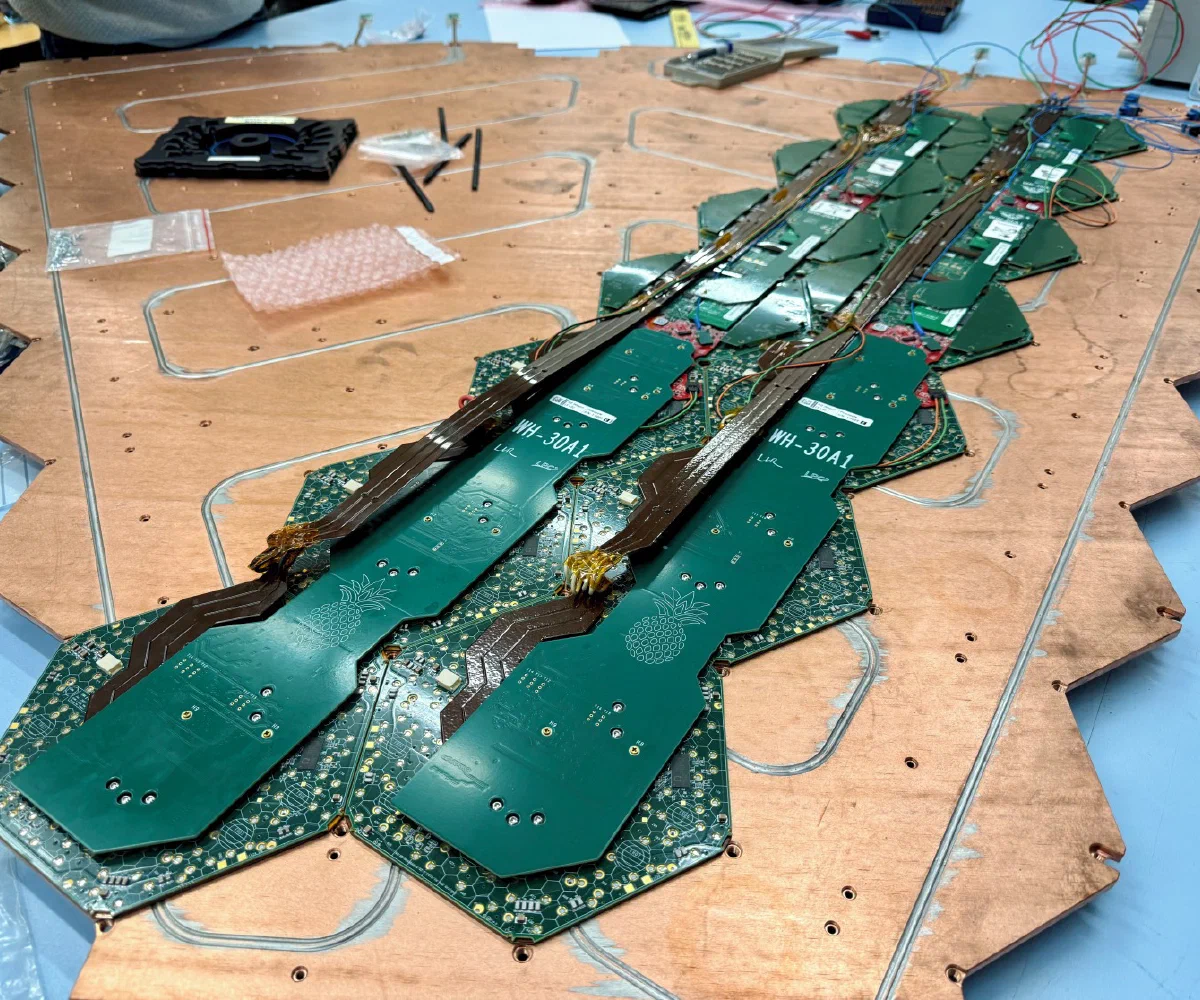
Fast simulation · 2026
CaloTrilogy
A physics-guided approach to end-to-end calorimeter shower generation in one or a few integration steps, combining a learned shower prior with detector-aware objectives.
Read the preprintParticle physics · machine learning · scientific computing
Joint appointment · 2026–present Northwestern University × Fermilab
I develop physics-aware machine-learning methods, collider analyses, and reproducible tools for turning complex detector data into useful measurements.
Selected research
A selection spanning fast detector simulation, particle representation learning, quantum and sequence models, CMS analyses, and lepton-collider studies.
Fast simulation · 2026
A physics-guided approach to end-to-end calorimeter shower generation in one or a few integration steps, combining a learned shower prior with detector-aware objectives.
Read the preprintJet physics · ICML 2022
A transformer architecture that encodes particle-interaction structure directly in attention, benchmarked on the 100-million-jet JetClass dataset.
Long sequences · AISTATS 2025
Structured state-space models paired with locality-sensitive hashing to model long, sparse particle sequences efficiently.
Quantum machine learning · 2022–2026
From a six-qubit quantum-kernel classifier for CEPC Higgs events—tested on IBM and Origin hardware—to knowledge distillation for smaller, shallower quantum neural networks.
Lepton colliders · 2020–2025
A publication program spanning electron–muon, muon, same-sign muon, neutrino–lepton, and neutrino–neutrino colliders—from flavor and Majorana-neutrino searches to vector-boson scattering and quantum entanglement.
CMS analysis program
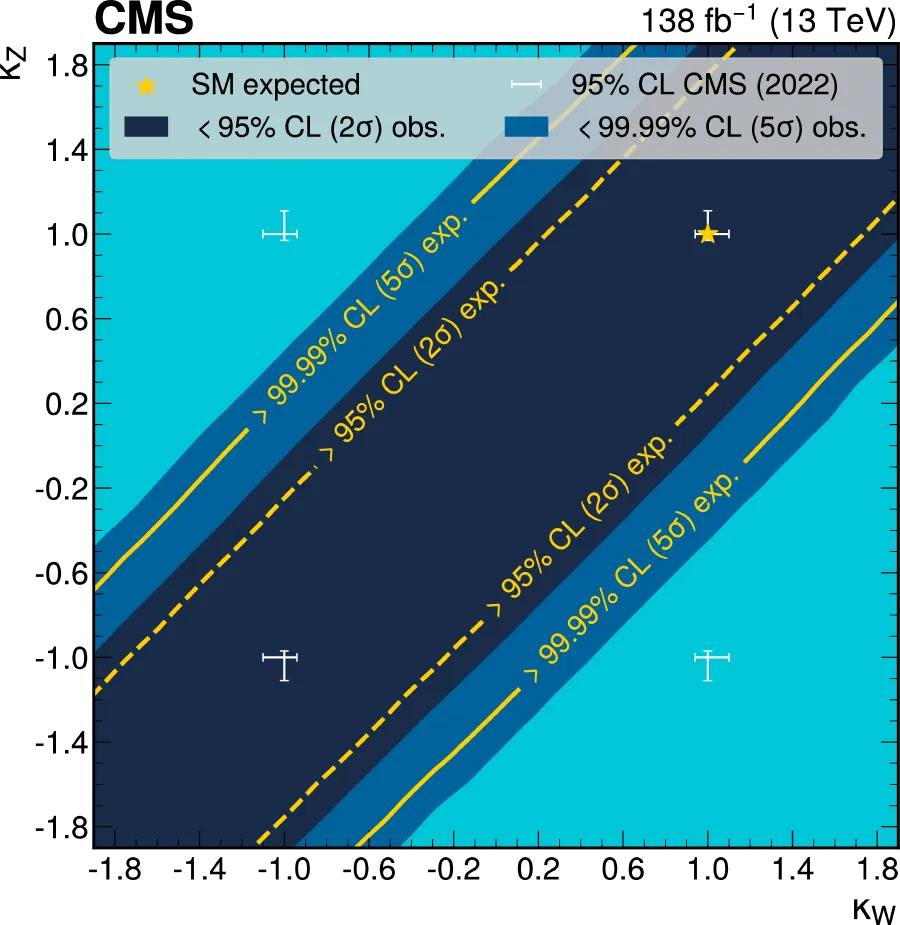
The first study of WH production through vector-boson scattering, combining resolved and boosted Higgs-to-bottom-quark topologies to test the relative sign of the Higgs couplings to W and Z bosons.
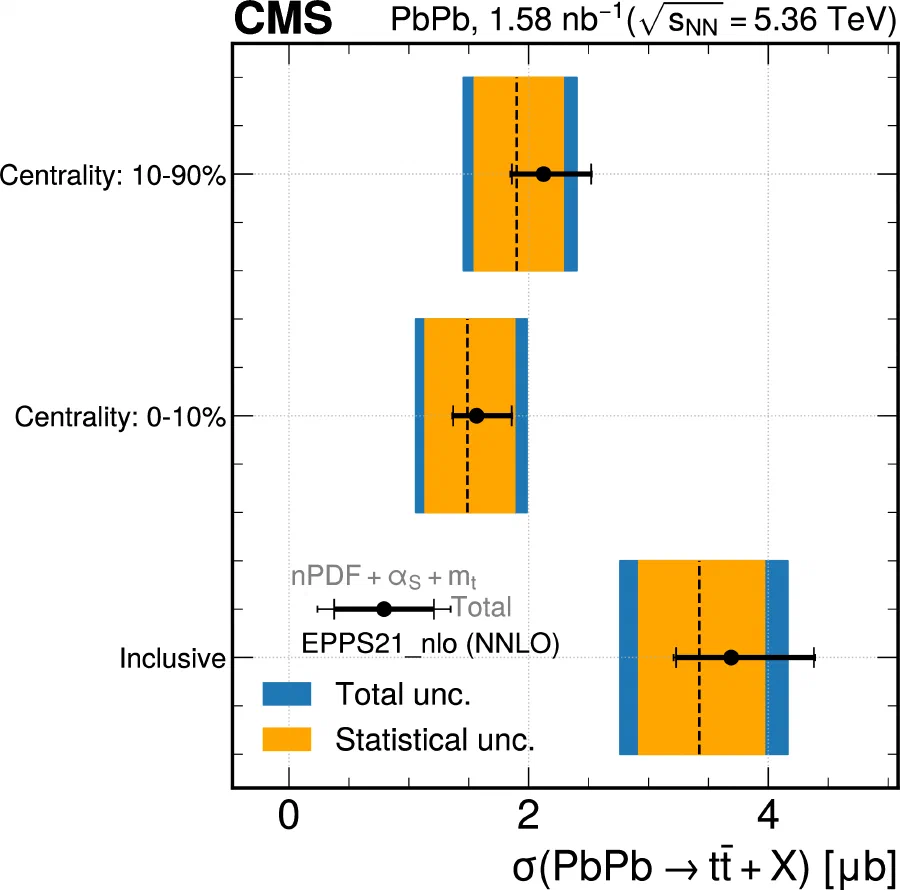
The first measurement of the top–antitop production cross section at 5.36 TeV per nucleon pair in lead–lead collisions, using dilepton events, modern heavy-flavour tagging, and a dedicated b-jet calibration to study its centrality dependence.
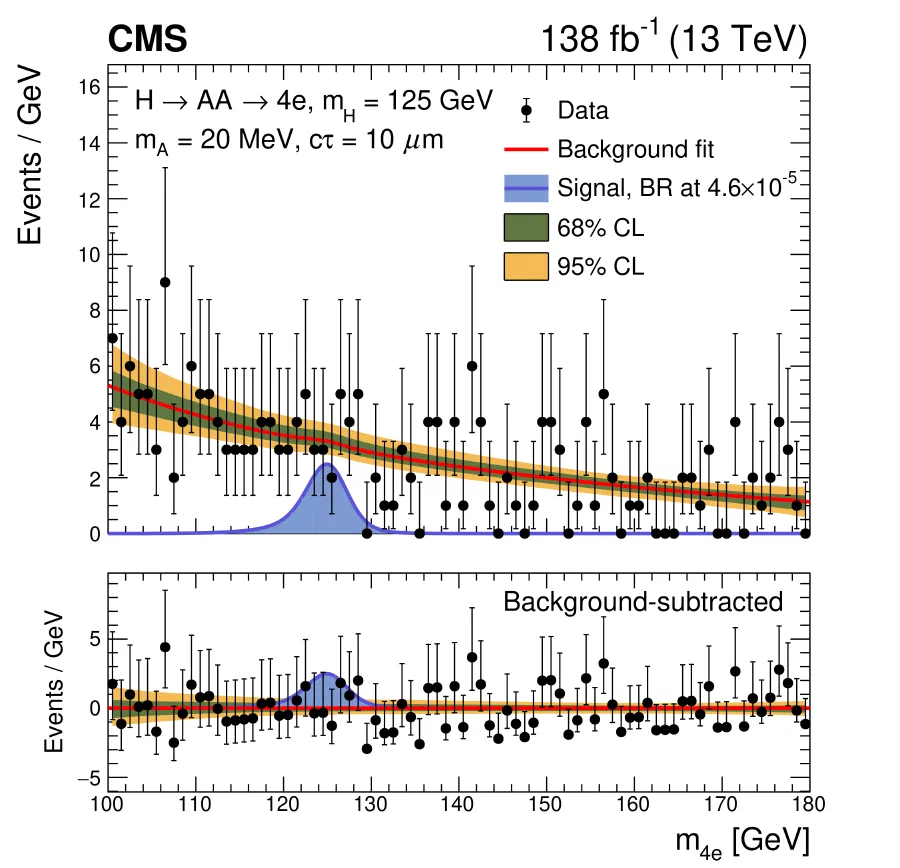
The first LHC search for Higgs decays to pairs of light pseudoscalars in the four-electron final state, using a purpose-built track-and-calorimeter classifier for highly collimated electron pairs.
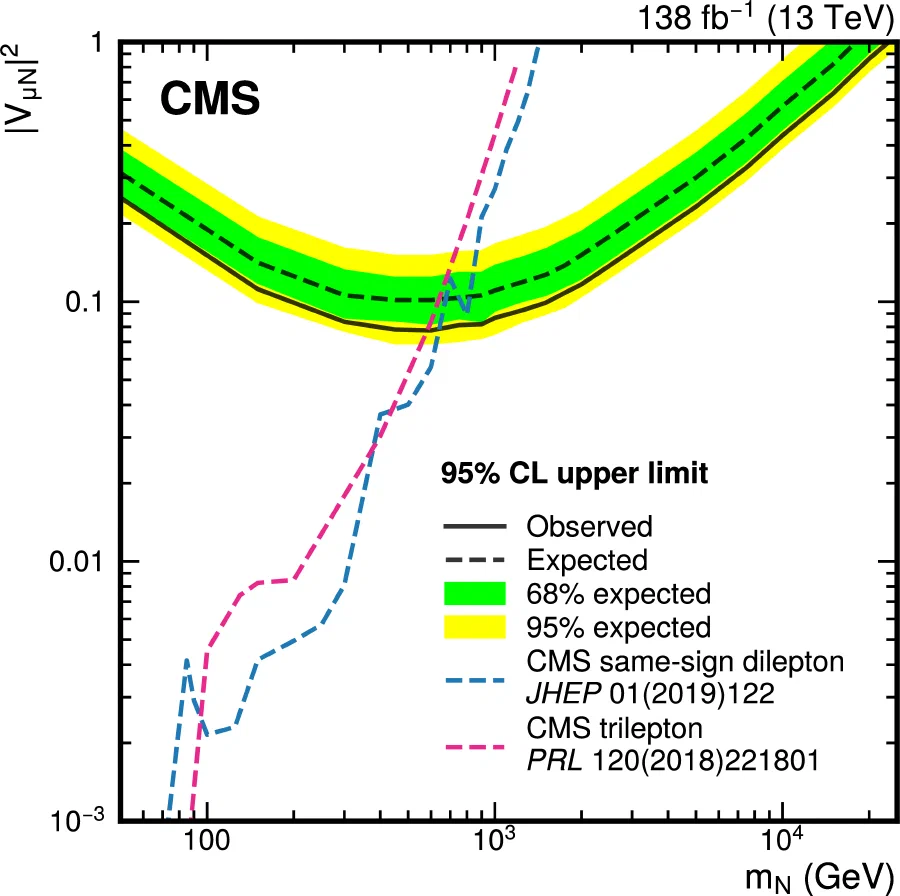
The first vector-boson-fusion search for heavy Majorana neutrinos and the Weinberg operator, using same-sign dimuons to extend direct sensitivity into the multi-TeV regime.
For the full publication record and citation details:
View Google Scholar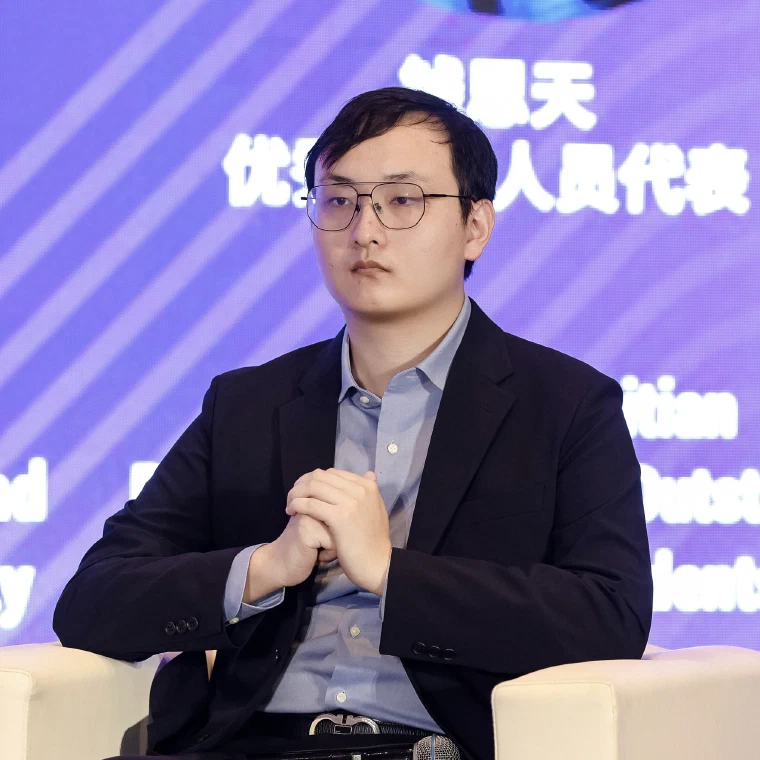
Sitian Qian · 钱思天
About
I am an experimental particle physicist at Northwestern University and Fermilab, and a convener of CMS Offline Samples. My work connects collider measurements, physics-aware machine learning, detector simulation, and the infrastructure that turns collisions into analysis-ready datasets.
Now
Joint appointment · 2026–present
CMS
Physics Performance and Datasets · current
Previously
Research affiliation · 2025–2026
Training
PhD, Particle and Nuclear Physics · 2025
Current focus
Three connected layers of the same practice: measurements, models, and the infrastructure that makes both reproducible.
01
Analysis strategies for rare or structurally rich signatures, with attention to interpretable observables and robust uncertainty treatment.
02
Models that incorporate symmetry, geometry, or particle-interaction structure instead of treating detector data as generic tokens.
03
Reproducible generation, simulation, and analysis workflows that scale from an exploratory notebook to distributed computing.
Selected pieces
Longer-form work that lives beside the code: generator studies, software experiments, installation guides, and validation records.
01
Packaging experiment · Aug 2026
An experimental route to a pip-installable CMS Combine v11, built against the ROOT PyPI distribution with tested CI wheel artifacts and an explicit support boundary.
02
Workbench guide · Aug 2026
A reproducible CMSSW 16 and Combine v11 setup for CERN SWAN, including a dedicated Jupyter kernel, an idempotent installer, and end-to-end validation.
03
Generator study · Jul 2026
JetClass taught by different tutors: matched detector-level editions using Sherpa, Herwig, DIRE, and VINCIA for stress-testing jet taggers against generator choices.
04
Lepton collider simulation · Jun 2026
A generator-agnostic bridge from modern HepMC3 event generators into the legacy DELPHI detector simulation and reconstruction chain at the LEP Z pole.
05
Software notebook · 2026
A semantics-first, pure-Rust NanoAOD framework exploring typed analysis states, native ROOT I/O, and reproducible validation against CMS Open Data.
Appointments & education
Research appointments in the U.S. alongside physics training at Peking University.
Appointments
2026–present
Joint appointment
2025–2026
Research affiliation at the LHC Physics Center
Education
2020–2025
School of Physics & State Key Laboratory of Nuclear Physics and Technology, Peking University
Supervisor: Qiang Li
2016–2020
School of Physics, Peking University
2017–2020
National School of Development, Peking University

Field note
A small piece of the original site survives here—not as decoration, but as a reminder that research benefits from keeping a little play in the process.
|me⟩ = 1⁄√2 |sometimes naïve⟩
+ 1⁄√2 |sometimes trivial⟩
Contact
For research conversations, collaborations, or questions about the work, email is the most direct route.
sitian.qian@cern.ch